
Disaster response / October 2018
Operation Final Chance
An earthquake, a tsunami, and ground that turned to liquid. HARP Rescue went into Palu to find the people still trapped.
- Dozensof people rescued from the rubble
- 2teams rotating daily in an active quake zone
- BNPBcommendation from Indonesia’s disaster agency
- 9days after the quake, HARP launched
Figures from HARP Rescue’s impact report for Operation Final Chance.
A / The situation
When the ground itself gave way.
On September 28, 2018, a magnitude 7.5 earthquake struck 72 kilometers north of Palu, a city of more than 330,000 on the Indonesian island of Sulawesi.12 It set off a tsunami that hit the coast minutes later, and then something few people had seen on this scale: liquefaction.2
In the Balaroa neighborhood, most of the 1,747 buildings disappeared as the ground flowed.2 In Petobo, some 180 hectares of homes vanished.4 More than 4,300 people are known to have died across Central Sulawesi — in Palu, Donggala, Sigi and Parigi Moutong.2
B / The call
Requests from Indonesia’s disaster agency.
On October 7, 2018, HARP Rescue launched Operation Final Chance in response to urgent requests from NGOs and from Indonesia’s National Disaster Management Agency (BNPB): locate, recover and rescue civilians trapped in collapsed structures and in the liquefaction zone.
C / The plan
Learn a new hazard, fast.
The team worked through repeated briefings with BNPB to assess the risks, and studied local maps to find the fastest routes into and out of the disaster zones.
Liquefaction was a phenomenon the team had not worked in before. Before going in, HARP studied how and why it happens and what it does to the ground, so it could recognize and avoid the hazard.
Access was tightly controlled. The government restricted entry to the area and admitted only organizations it judged qualified for high-risk, complex and sensitive work. HARP Rescue was granted permission to operate.
D / In the field
Two teams, one rule: never alone.
The greatest danger was the one no one could predict: the ground was still moving. In the days after the main quake, the region recorded more than 170 aftershocks.3
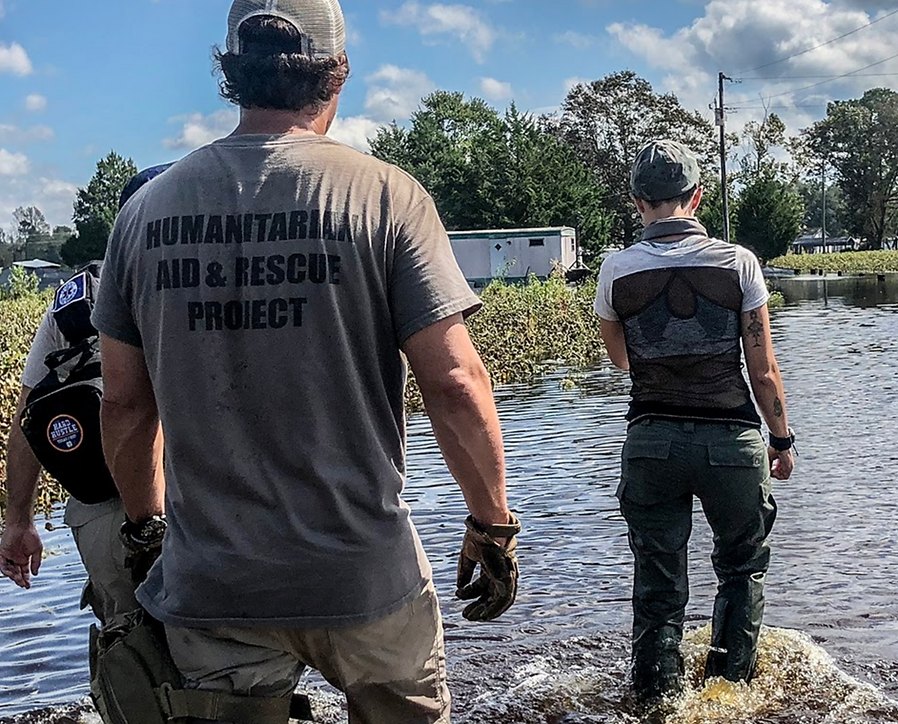
HARP split into two teams that swapped roles each day. One worked in the field, rescuing people and giving aid; the other stood by with resources, ready to respond to another earthquake or to rescue the rescuers. No field team ever worked without backup.
E / The outcome
Lives saved, families answered.
HARP’s searches found people alive in the rubble. Dozens who were trapped and in immediate danger were rescued and returned to their families.
The team also recovered those who had not survived, searching the wreckage so that remains could be returned with respect and families could mourn.
At the end of the operation, BNPB commended HARP for its effectiveness in saving Indonesian lives. HARP was invited to share what it had learned, and trained local government rescue teams in risk assessment, situational awareness and disaster assessment.
Sources
HARP Rescue’s actions and figures come from its own impact report for this operation. Background on the event comes from the public sources below.
In a disaster like this, the first days decide who is found. Help us get there.
Every rescue requires preparation, experience, and resources. Your contribution helps put those resources in place before the next mission begins.
Help fund the next missionSecure checkout through Zeffy · HARP Rescue is a registered 501(c)(3) nonprofit · Contributions are tax-deductible to the extent allowed by law