Disaster response / September 2018
Operation Cottonmouth
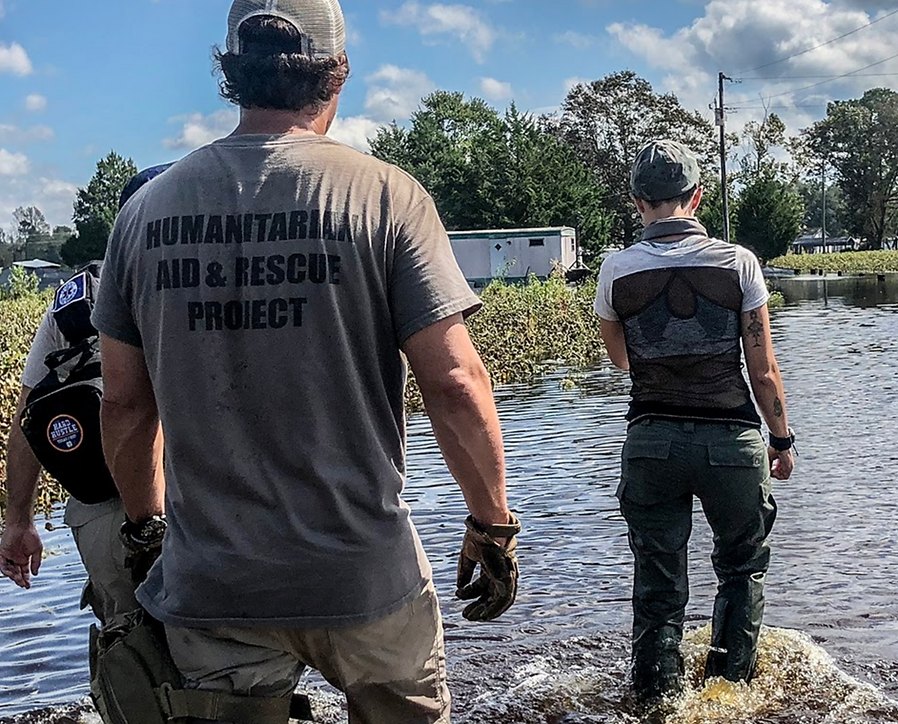
Florence came ashore as a Category 1 and still drowned the Carolinas. HARP Rescue went in by boat, and under the water.
- 45+people rescued
- 10+bridges and overpasses inspected by divers
- 12days on mission
- 3days after landfall, HARP deployed
Figures from HARP Rescue’s impact report for Operation Cottonmouth.
A / The situation
A slow storm, and the water it left.
Hurricane Florence made landfall at Wrightsville Beach, North Carolina, on the morning of September 14, 2018.1 It came ashore as only a Category 1, with 90-mph winds and a damaging storm surge — but then it barely moved.
Lingering over the Carolinas, Florence dropped 35.93 inches of rain near Elizabethtown, a North Carolina record, and pushed rivers past the flood marks set by Hurricanes Matthew and Floyd.2 Emergency workers made more than 2,600 swift-water rescues in North Carolina alone.3 More than 50 deaths were reported.1
Thousands of residents were displaced, many communities were without power for long stretches, and floodwater cut off whole areas that could only be reached by boat or helicopter.
B / The call
Report to the EOC.
HARP Rescue deployed to North Carolina on September 17, three days after landfall. On arrival, the team coordinated with the local Emergency Operations Center and Fire Rescue to find out where it was needed most.
C / The plan
Rescue on the surface. Inspect below it.
The plan had two parts. On the surface, boat crews would reach residents trapped in their homes and bring them to evacuation centers.
Below the surface, HARP’s divers would inspect submerged bridges and overpasses for flood damage — information local authorities needed before they could send traffic, or rescuers, across.
D / In the field
Snakes, gators and current.
The region was in chaos. Many communities were isolated by floodwater that also carried water moccasins and alligators, making every rescue more dangerous.
Boat teams worked through that water to reach people trapped in their homes and carry them to safety. Divers worked in it too, checking bridge structures they could not see.
E / The outcome
Forty-five people. Ten bridges.
Over 12 days, HARP Rescue rescued more than 45 people. The dive team evaluated more than 10 bridges and overpasses, giving local authorities what they needed to judge whether those structures were safe.
The rescues saved lives that week. The inspections helped the recovery that came after.
A slow-moving storm can cause severe flooding long after its winds have dropped — preparation has to be built for the water, not just the wind.
From the operation’s conclusion
Sources
HARP Rescue’s actions and figures come from its own impact report for this operation. Background on the event comes from the public sources below.
The storm is the first disaster. The flood is the second.
Every rescue requires preparation, experience, and resources. Your contribution helps put those resources in place before the next mission begins.
Help fund the next missionSecure checkout through Zeffy · HARP Rescue is a registered 501(c)(3) nonprofit · Contributions are tax-deductible to the extent allowed by law